



Hair weaves and hair extensions are often compared as if they are completely different, but the relationship is more specific: a hair weave is one type of hair extension method. Hair extensions are the larger category, while weaves usually refer to wefts or bundles installed into braided natural hair.
What Are Hair Weaves?
Hair weaves are a type of hair extension method where wefts or bundles of hair are usually sewn into cornrows or braided natural hair. They are often chosen for fuller installs, protective styles, and longer-lasting looks. A weave can add length, volume, texture, or color while keeping your natural hair tucked away underneath.
Weaves are commonly installed by a stylist because the braid pattern, tension, and placement matter. When installed too tightly or worn for too long without proper care, a weave may cause scalp discomfort or stress around the hairline.
What Are Hair Extensions?
Hair extensions are added hair pieces used to increase length, fullness, texture, or color. They come in several forms, including clip-in hair extensions, tape-ins, sew-in weaves, halo extensions, micro-links, fusion extensions, crochet extensions, and human hair bundles.
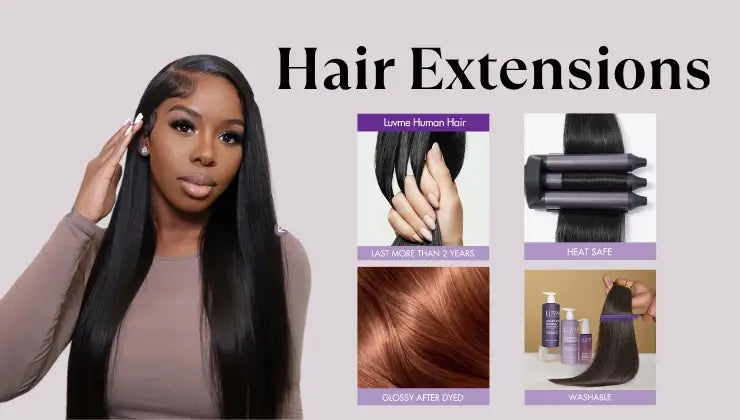
The biggest advantage of hair extensions is variety. Some methods, like clip-ins, can be applie and removed at home. Others, like tape-ins, sew-ins, or crochet installs, usually need more time, sectioning, and maintenance.
Are Hair Weaves the Same as Hair Extensions?
Hair weaves are extensions, but not all extensions are weaves. Think of hair extensions as the broad category and hair weaves as one installation method within that category.
Hair Weaves vs Hair Extensions Comparison
| Aspect | Hair Weaves | Hair Extensions |
|---|---|---|
| Category | One type of extension method | Larger category of added hair methods |
| Installation | Usually sewn into cornrows by a stylist | Can be clip-in, tape-in, sew-in, crochet, halo, fusion, or micro-link |
| Wear Time | Often worn for several weeks with proper care | Ranges from daily removable to semi-permanent |
| Beginner Friendly | Usually requires professional help | Clip-ins are beginner-friendly; other methods may need a stylist |
| Best For | Protective styling, fuller installs, longer wear | Flexible styling, temporary volume, length, color, or texture changes |
| Maintenance | Requires scalp care and careful cleansing around the braids | Depends on method; clip-ins are easiest to remove and care for |
Key Differences Between Hair Weaves and Hair Extensions
Installation Method
Weaves are usually sewn into a braided base. Extensions can be attached in many ways, including clips, tape, crochet loops, beads, fusion bonds, or sew-in methods.
Styling Flexibility
Clip-in extensions offer more day-to-day flexibility because you can remove them at night or change the placement. Weaves are more fixed once installed.
Comfort and Scalp Tension
A weave can feel secure, but it may create tension if the braids or sewing are too tight. Removable extensions are easier to adjust, but they should still be placed gently.
Maintenance Level
Weaves need care for both the added hair and your natural hair underneath. Clip-ins are easier to wash separately, while crochet styles need careful detangling and scalp care.
Pros and Cons
Hair Weaves
- Pros: Long-lasting, full-volume finish, good for protective styling, works well with bundles.
- Cons: Usually needs a stylist, can feel tight if installed poorly, less flexible for daily removal.
Hair Extensions
- Pros: More method options, clip-ins are easy for beginners, good for temporary volume or texture changes.
- Cons: Some methods need regular upkeep, poor placement can cause pulling, color and texture matching matters.
Which One Should You Choose?
Choose a hair weave if you want a longer-lasting style, fuller coverage, or a protective look that stays installed for weeks. This option is useful if you like sew-in styles and do not want to install hair every day.
Choose clip-in hair extensions if you want temporary volume, fast length, or styling flexibility without a long-term commitment. Choose crochet hair extensions if you want a protective-style effect with more texture options, such as deep wave, Burmese curly, kinky straight, silky straight, or afro kinky bulk hair.
Best Match by Goal
- Best for long-term protective styling: Hair weaves, crochet extensions, or bundles with closure.
- Best for beginners: Clip-in hair extensions.
- Best for temporary volume: Seamless clip-ins.
- Best for textured protective looks: Crochet hair extensions.
- Best for fuller sew-in looks: Human hair bundles.
Luvme Crochet Hair Extension Picks
If you like the fuller, protective-style effect of weaves but want more texture choices, crochet hair extensions are another option to consider. These Luvme picks include a new crochet option plus deep wave, ombre brown, afro kinky, silky straight, and kinky straight textures.

Crochet Extension for Miracle Knots Boho Braids | Wet and Wavy, Burmese Curly, Kinky Straight

Readitress™ Pre-Separated Feather Crochet Human Hair | Deep Wave, Burmese Curly

Readitress™ Ombre Brown Deep Wave Pre-Separated Feather Crochet Human Hair

Readitress™ Afro Kinky Bulk Human Hair for Loc Extensions, Twists and Braids

Readitress™ Pre-Separated Feather Crochet Human Hair Extensions Silky Straight

Readitress™ Pre-Separated Feather Crochet Human Hair Extensions Kinky Straight
Conclusion
Hair weaves and hair extensions are closely related, but they are not exactly the same. Hair extensions are the larger category, while a weave is one method of installing added hair. If you want a long-lasting protective style, a weave, crochet extension, or bundle install may be the better choice. If you want flexible, beginner-friendly volume, clip-in extensions are easier to use and remove.


 + 1
+ 1
 + 1
+ 1
 + 44
+ 44