



Hair texture, length, color, and lace size are easy to notice when shopping for a wig, but the small parts inside the cap often determine how the wig feels and stays in place. Combs, elastic bands, adjustable straps, hooks, drawstrings, clips, and Velcro do not perform the same job. Some anchor the cap, some spread tension, and others change the fit around the back of the head.
A wig may include several security features at once, but more hardware does not automatically mean a better fit. A comfortable result starts with the correct cap size and only enough tension to keep the wig stable. For a broader explanation of complete Luvme cap designs, read the Luvme Wig Cap Construction Guide.
Table of Contents
- What Is Inside a Wig?
- What Do Wig Combs Do?
- What Does the Elastic Band Inside a Wig Do?
- What Do Adjustable Straps Do?
- What Do Three-Position Hooks Do?
- What Do Drawstrings Inside a Wig Do?
- What Do Solid Clips Do?
- What Does Velcro Inside a Headband Wig Do?
- How to Adjust the Parts Inside a Wig
- Luvme Wigs with Different Inside Cap Features
- Conclusion
What Is Inside a Wig?
Inside a wig is a built-in cap that supports the hair, lace, parting area, and security components. The exact layout depends on the product. A closure, frontal, V-part, headband, or no-lace wig may use a different combination of parts.
Wig combs are usually placed near the front, sides, or nape and slide beneath suitable natural hair, braids, or a compatible base. Snap clips open and close around smaller sections of natural hair. Elastic bands provide broader support. Adjustable straps and hooks refine back tension. Drawstrings tighten the circumference or nape more directly. Velcro is mainly used on headband wigs.

Not every wig contains every component. Check the interior image for the selected product.
| Inner Part | Common Location | Main Function | What to Check |
|---|---|---|---|
| Wig Comb | Front, sides or nape | Slides beneath suitable hair or a base to add anchoring | Whether it is fixed or removable |
| Snap Clip | Around a V-part or U-part opening | Opens and closes around natural leave-out | Hair strength and clip placement |
| Elastic Band | Across the inner cap | Spreads support across a wider area | Width, tension and anti-slip material |
| Adjustable Straps | Back of the cap | Change tightness around the nape | Strap length and symmetrical adjustment |
| Three-Position Hooks | Back fastening points | Provide several settings for adjustable straps | The product’s exact cap-size range |
| Drawstring | Back, nape or selected perimeter | Directly tightens part of the cap | Cord position and balanced tension |
| Velcro | Attached band on a headband wig | Fastens and adjusts the headband | Temple and ear pressure |
What Do Wig Combs Do?
Wig combs have several teeth that slide under a flat hair foundation or suitable wig cap. They provide extra anchoring and may reduce movement. They should sit flat rather than being pushed sharply against the scalp.
Removable vs Fixed Combs
Removable combs can be detached when the wearer prefers a softer interior or does not have enough natural hair for comfortable anchoring. Fixed combs remain sewn into the cap and provide a consistent attachment point. Check the interior diagram because comb number and placement vary.
Wig Combs vs Wig Clips
A wig comb slides under hair and uses multiple teeth. A wig clip is a snap-open component that closes around natural hair. Clips are common around V-part or U-part openings because they provide concentrated attachment near the leave-out. Neither component should be forced against a bare, irritated, or sensitive scalp.
What Does the Elastic Band Inside a Wig Do?
An elastic band is usually wider than an adjustable strap. It holds the cap closer to the head and distributes support across a broader area. This can support glueless wear, but comfort still depends on width, tension, cap size, and wear time.
Cotton Elastic Bands
A cotton-covered elastic band combines stretch with a softer surface. It can provide broad support without relying only on small combs or clips. The band should lie flat and feel secure without pulling the hairline backward.
Anti-Slip and Detachable Bands
Some bands include an anti-slip strip that adds friction against a compatible base or scalp-contact area. A detachable band can be removed or repositioned according to the product design. Anti-slip material should not be treated as a reason to overtighten the band.
What Do Adjustable Straps Do?
Adjustable straps are narrow bands positioned near the nape. They tighten or loosen the back section of the wig and help reduce excess space around the lower circumference. Many straps connect to hooks or loops inside the cap.
Straps mainly affect the back and nape. They do not completely change crown depth, ear-to-ear width, or front-to-nape length. If the nape feels tight while the crown still gaps, recheck hair distribution, cap placement, and product measurements instead of tightening further.
What Do Three-Position Hooks Do?
Three-position hooks are fastening points for adjustable straps. Moving the straps to a different hook changes tension around the back of the cap. They are not the same as snap clips used to anchor a V-part wig.
The circumference supported by a hook system varies by product. A selected extended-range cap may fit more measurements, while another wig with similar hooks may use a standard medium cap. Follow the individual size chart rather than assuming every three-position system fits the same range.

Hooks create several fastening positions for the back straps; they do not clip into natural hair.
What Do Drawstrings Inside a Wig Do?
A drawstring provides direct control around the back, nape, or selected perimeter of a cap. Drawstrings can appear in closure, frontal, V-part, half, 360-lace, and full-lace designs.
Flexi-Fit Drawstring
A Flexi-Fit Drawstring is usually visible inside the back of the cap. It adjusts the circumference more directly than fixed straps alone. Tighten it evenly and stop when the wig feels stable. Too much tension can cause pressure, bunching, or an uneven front position.
Flexi-Fit Invisi Drawstring
An Invisi Drawstring uses a more discreet cord or placement so the adjustment system is less noticeable. It can appear on selected large-lace-area and other cap designs. “Invisi” describes the hidden adjustment approach, not a guarantee that every product has the same lace area or size range.
What Do Solid Clips Do?
Solid or snap clips open and close around natural hair. They are commonly placed near V-part and U-part openings, where they hold the cap close to the leave-out.
Clips work best on healthy, stable sections of hair. Repeatedly placing a tight clip on the same fragile area may cause pulling or discomfort. Change placement when possible and avoid forcing the clip closed.
What Does Velcro Inside a Headband Wig Do?
Velcro fastens the attached band on a headband wig. One side overlaps the other at the back, allowing the wearer to adjust the band before adding a decorative headband. This design avoids front lace and supports quick installation.
Fasten the Velcro firmly enough to reduce movement, but not so tightly that it creates pressure at the temples or behind the ears. Velcro is specific to headband-wig construction and is different from the elastic band or straps inside a standard lace wig.
How to Adjust the Parts Inside a Wig
Prepare a Flat Hair Base
Braid, wrap, or flatten natural hair evenly. Uneven bulk can create crown gaps even when the back feels tight.
Position the Front and Ear Areas
Place the front correctly, then align both ear tabs or side areas before adjusting the back.
Set the Adjustable Straps
Connect the straps at matching positions. Start loose and tighten gradually.
Adjust the Band or Drawstring
Smooth the elastic band flat or pull the drawstring evenly. Use only enough tension to reduce movement.
Secure Combs or Clips Last
After positioning the cap, slide combs under suitable hair or close clips around healthy leave-out. Do not use them to drag the cap into place.
Test the Fit
Turn your head, look down, and gently lift the back edge. The wig should remain stable without headaches, ear pressure, deep marks, or pulling.
Luvme Wigs with Different Inside Cap Features

PreMax Water Wave 13x4 Frontal Wig
Feature focus: a Flexi-Fit Invisi Drawstring for discreet circumference adjustment, paired with a glueless 13x4 frontal lace area.
View Product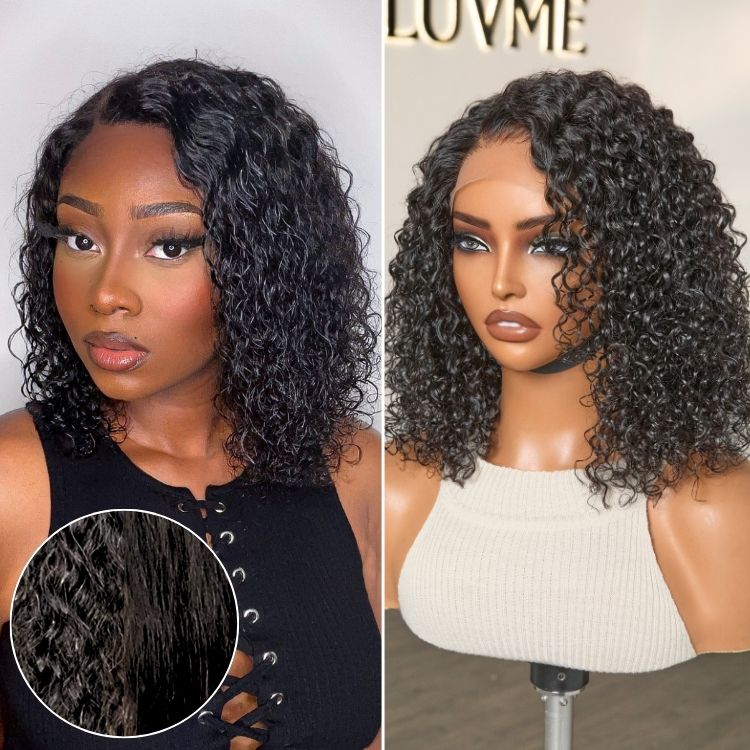
Wet and Wavy 5x5 Closure Water Wave Wig
Feature focus: a glueless closure cap offered with Regular Cap and selected All-Day Comfort Cap options for different fit preferences.
View Product
Water Wave Pixie Cut Glueless Wig
Feature focus: a compact minimalist HD lace area and glueless medium cap designed for a short, low-bulk wearing experience.
View Product
All-Day Comfort PartingMax 7x6 Body Wave Wig
Feature focus: an adjustable All-Day Comfort cap with a broad listed circumference range and a glueless 7x6 closure construction.
View Product
Ready to Go Water Wave Short Curly Bob Wig
Feature focus: a pre-cut minimalist HD lace area with a glueless medium cap for a simplified daily installation routine.
View Product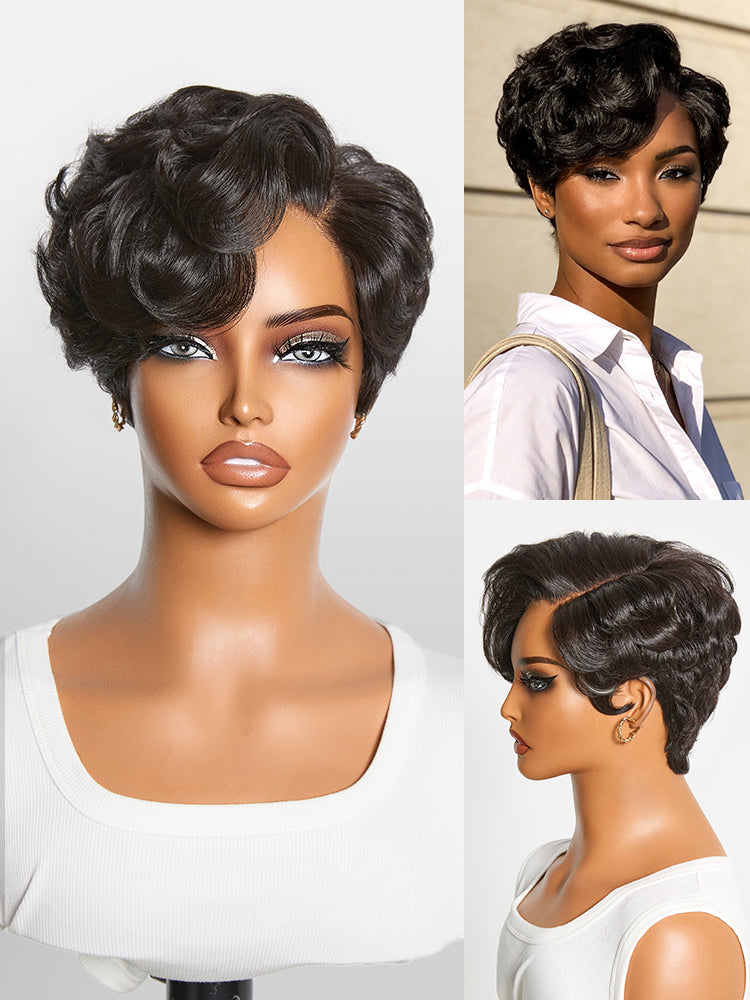
Beginner Friendly Lightweight Roll Curl Pixie Wig
Feature focus: a lightweight short construction with minimalist HD lace, pre-cut lace, and a glueless medium cap.
View ProductConclusion
The parts inside a wig are designed to work together, but each has a different purpose. Combs and snap clips provide anchoring, an elastic band spreads support, adjustable straps change nape tension, hooks provide fastening levels, drawstrings offer direct size control, and Velcro secures a headband wig.
A secure fit should not depend on painful tension. Position the cap first, adjust the back gradually, and attach combs or clips only after alignment. Checking the interior image, cap measurements, removable parts, and adjustment system before ordering can help you choose a wig that feels as practical as it looks.


 + 1
+ 1
 + 1
+ 1
 + 44
+ 44