



Long hair can look beautiful at one length, but it may also feel heavy, flat, or difficult to shape. A V cut keeps the visual length while giving the back a more defined outline. Instead of ending in a straight line, the perimeter narrows toward the center, creating a soft or dramatic V-shaped point.
The result can look sleek on straight hair, airy on layered blowouts, and dimensional on waves or curls. This guide explains how the shape works, who it suits, and which V cut hairstyles can bring more movement to long hair.
Quick answer: A V cut is a long haircut in which the center back remains the longest point and the sides become gradually shorter. It preserves visible length while creating movement through the perimeter and optional internal layers. A soft V keeps the ends looking fuller, while a deep V creates a more dramatic finish.
What Is a V Cut Hairstyle?
A V cut is defined mainly by the outline at the back. When the hair falls naturally, the longest section sits in the center and the perimeter rises gradually toward both sides. From behind, the ends form a V rather than a straight, rounded, or blunt line.
The cut may include long internal layers, face-framing pieces, curtain bangs, or minimal layering. The V shape refers to the perimeter, while “layers” describe different lengths within the haircut. Combining both techniques can reduce heaviness and add movement, but enough density should remain at the center so the point does not look thin or disconnected.

Signature Features of a V Cut
Defined Back Shape
The center back remains visibly longer than the sides, creating a tapered outline that is easy to recognize when the hair is worn down.
Length With Movement
The haircut keeps a long appearance while preventing the ends from looking like one heavy block. Long layers can add flow without removing the central length.
Flexible Finish
A V cut can look smooth, softly waved, curly, feathered, or blowout-inspired. The depth of the V can also be adjusted to suit different densities and preferences.
Who Does a V Cut Work Best For?
Long, Thick Hair
A V cut works well when long, dense hair feels bulky around the lower half. The tapered perimeter and long layers distribute weight more gradually, helping the hair move while keeping the longest section at the center.
Straight Hair
Straight hair makes the V-shaped outline highly visible. A soft V creates a clean finish, while a deeper point produces stronger contrast. Because uneven lines are easier to see, the back should be checked carefully for symmetry.
Wavy, Curly, or Coily Hair
Natural texture can make the shape appear fuller and more dimensional. The stylist should account for shrinkage and avoid cutting the center point too narrowly. A wider V often blends more smoothly with curls.
Fine or Lower-Density Hair
Fine hair can still wear a V cut, but a soft, shallow shape is usually more flattering than a sharp point. Keeping the perimeter wider and limiting heavy internal layering helps preserve density through the ends.
6 V Cut Hairstyles for Long Hair
Soft V Cut With Long Layers
A soft V uses a wide, gradual angle rather than a sharp point. It is a versatile choice for first-time wearers and for hair that needs movement without losing fullness. Long blended layers keep the back shape smooth and work well straight or waved.
Deep V Cut for Extra Drama
A deep V creates a longer central point and a stronger difference between the middle and sides. It works best on long, dense hair with enough fullness to support the tapered outline. The back view becomes especially visible when the hair is sleek or lightly curled.
V Cut With Face-Framing Layers
Face-framing layers bring the shape forward so the haircut looks intentional from every angle. Shorter pieces around the cheekbones, jaw, or collarbone soften the front while the longer back layers preserve the V-shaped silhouette.
Curly or Coily V Cut
A curly V cut uses natural volume to create a dimensional body with a tapered center. The shape should be evaluated on dry or naturally settled hair so shrinkage does not make the finished point much shorter than expected.
Butterfly-Inspired V Cut
Butterfly layers create shorter movement around the face and upper lengths while maintaining longer hair underneath. Paired with a V-shaped perimeter, the result feels airy and full without sacrificing the central length.
V Cut With Curtain Bangs
Curtain bangs balance the strong back shape by adding softness around the forehead and cheekbones. The front sections can blend into the sides, creating a continuous flow toward the longest point.
Luvme Layered Cut Wigs With a V-Shaped Silhouette
A layered human hair wig offers a ready-shaped way to wear the movement and tapered finish associated with a V cut. Luvme layered cut wigs use graduated lengths, face-framing sections, butterfly layers, and long back pieces to create dimension rather than a flat, one-length outline. The depth of the V may vary by product, length, and styling, so review the product images before choosing.
Swipe or scroll horizontally to explore layered straight, Yaki, butterfly-cut, and loose-wave styles.

All-Day Comfort™ Butterfly Cut Layered Wig
This natural black layered style combines a butterfly cut with a light Yaki straight texture. Longer lower sections and shorter face-framing layers create a flowing, tapered silhouette, while the 7x6 closure provides flexible parting space.
View Product →
Ombre Brown Butterfly Cut Layered Yaki Wig
The ombre brown color makes each layer easier to see, emphasizing movement through the lengths. Its butterfly-inspired structure keeps the lower sections long while adding a softer frame around the face.
View Product →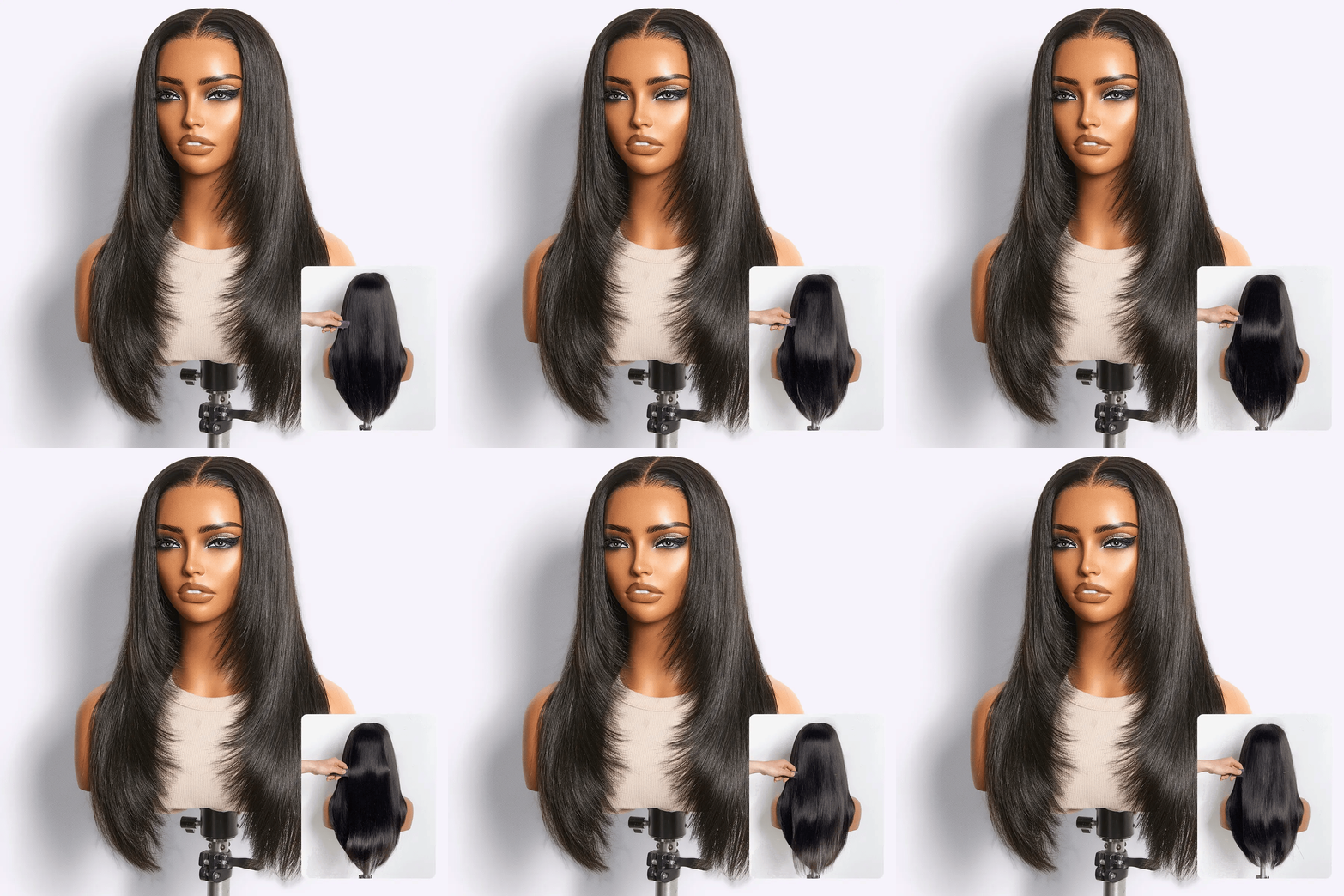
PreMax Face-Framing Layered Silky Straight Wig
This silky straight 13x4 frontal style shows how long face-framing layers can lead into a tapered back. The sleek texture highlights the layered outline for a polished interpretation of the V cut.
View Product →
All-Day Comfort™ Layered Loose Body Wave Wig
Loose body waves add volume between the layers and soften the tapered shape. The long butterfly cut creates movement through the front, sides, and ends, offering a fuller alternative to a completely straight V-shaped style.
View Product →Conclusion
A V cut is a strong choice for long hair when the goal is to preserve length while creating a more sculpted back and greater movement. A soft V supports fuller-looking ends, while a deeper V produces a more dramatic point. Straight, wavy, curly, and coily hair can all wear the shape when the angle and layers match the hair’s density and natural behavior.
For a ready-shaped alternative, layered human hair wigs can provide face-framing movement, long central length, and a tapered silhouette without cutting natural hair.


 + 1
+ 1
 + 1
+ 1
 + 44
+ 44