




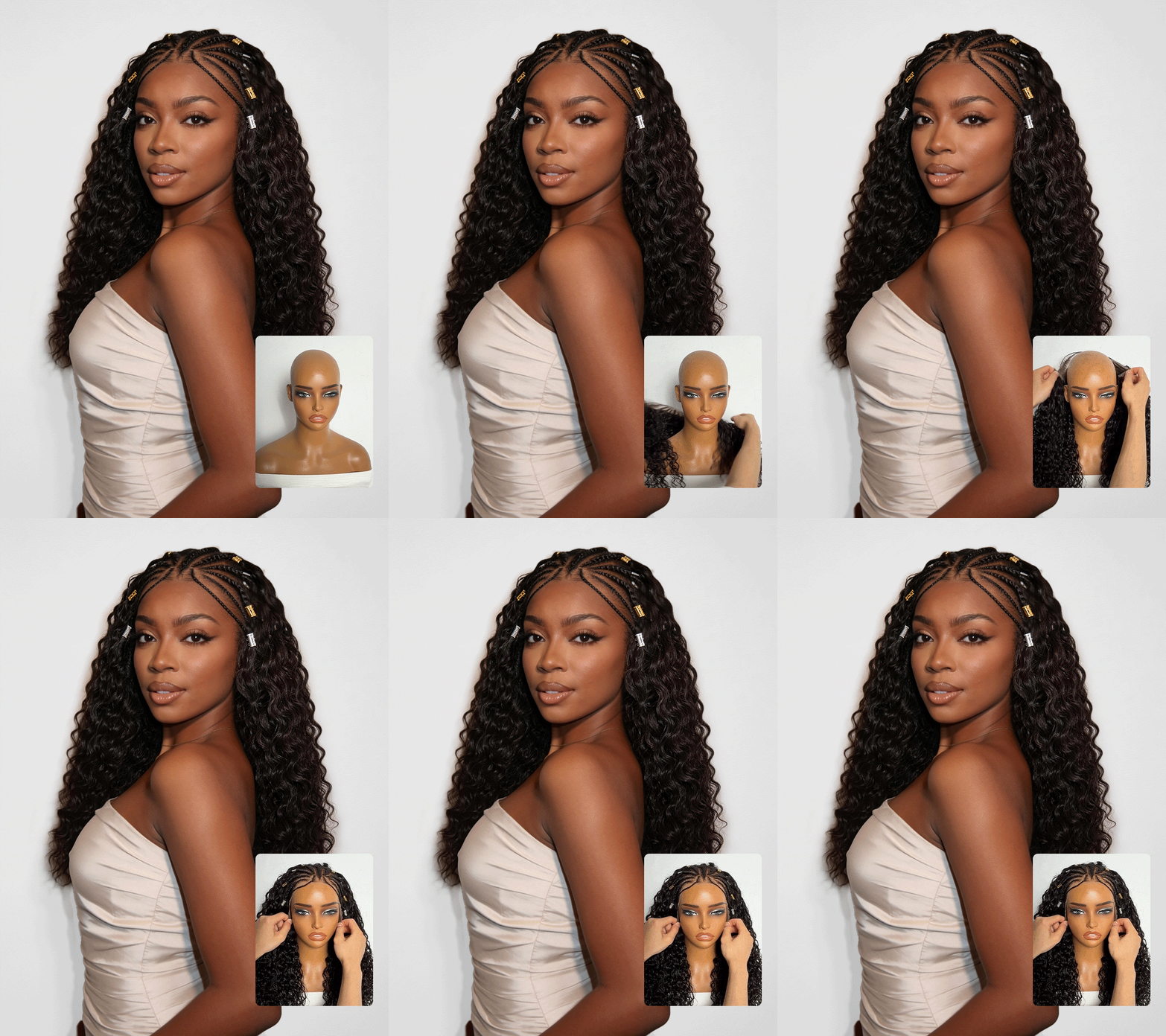
Fulani Braided Styles
Fulani-inspired patterns use visible rows and sections across the front or top. Check whether the design has a center layout, side direction, curled ends or loose textured lengths.


Braided lace front wigs use a wide frontal lace area to create a visible front hairline while supporting braided details across the forehead and top of the wig. Selected Luvme styles include Fulani braids, cornrows, side braids, boho curls and pre-braided front designs paired with straight, wavy or curly loose hair.
This collection focuses on 13x4 and 13x6 frontal constructions. These lace sizes provide broader front coverage than a closure, but the braided pattern is often prepared in advance. A larger frontal does not automatically mean the braids or parting can be moved freely.
Browse all braided wigs when you want to compare frontal, closure and full-lace constructions. Shoppers who prefer to avoid visible lace preparation can also explore braided headband wigs .
The first number describes the approximate width of the frontal lace, while the second describes how far the lace extends back in the central area. The additional depth of a 13x6 frontal may create more room behind the front hairline, but the preset braid design still determines the usable styling space.
| Lace Construction | Front Coverage | Styling Consideration | What to Check |
|---|---|---|---|
| 13x4 Frontal | Wide frontal coverage with approximately four inches of central depth | Supports a defined frontal hairline and the product’s prepared braided layout | Review the temple position, braid direction, ear tabs and whether the lace is pre-cut. |
| 13x6 Frontal | Similar frontal width with a deeper central lace area | May provide additional room behind the front hairline, depending on the braid pattern | Do not assume unrestricted parting; confirm where braids and loose hair are placed. |
| 5x5 Closure | Lace is concentrated at the top-front rather than extending across the full forehead | Requires less lateral lace positioning but provides less temple coverage | Compare the available parting area and whether the braided top is fixed. |
| Full Lace | Lace extends across a larger portion of the cap | Better suited to products designed for broader perimeter styling or selected updos | Confirm the actual cap construction and whether the braided layout supports the intended hairstyle. |
The braid placement usually has a greater effect on the finished appearance than the loose-hair texture alone. Compare the front pattern, braid coverage and unbraided lengths together.
Fulani-inspired patterns use visible rows and sections across the front or top. Check whether the design has a center layout, side direction, curled ends or loose textured lengths.
Cornrows are combined with loose curls or waves for added movement. The unbraided sections may require more detangling than the braided front.
Braids are concentrated toward one side or arranged around a prepared side part. Confirm the braid direction from the wearer’s perspective before ordering.
These wigs keep most of the length loose while adding braided details near the front or top. They are different from wigs braided through the full length.
Shorter lengths emphasize the front braid design and the outline of the cut. Review the finished length, perimeter and side profile.
Longer styles display more of the braid-and-curl combination but require additional care to reduce friction, tangling and compressed curls during storage.
A smooth foundation and accurate frontal placement help the braided pattern sit in the intended position. Avoid using the braids themselves to pull or reposition the cap.
Support the lace edge when putting on or removing the wig. Do not reposition the cap by pulling directly on the braids.
Avoid applying heavy gel, wax or oil directly across the lace, braid roots and prepared parting areas.
Use fingers or a suitable wide-tooth tool on unbraided lengths rather than repeatedly brushing through defined curl groups.
Allow the wig to dry completely and store it so the frontal lace, front cornrows and loose ends are not compressed.
The braided pattern is usually prepared before delivery, so the main braid direction may remain fixed. Limited adjustment may be possible in loose-hair areas, depending on the frontal depth and the product’s braid layout.
Some styles support glueless wear through adjustable straps, elastic bands, combs or a drawstring cap. Frontal size alone does not determine whether adhesive is needed, so review the individual product’s securing system.
A lace front mainly provides lace across the forehead and does not usually create a lace hairline around the nape. A high ponytail therefore depends on the back cap construction, braid placement and whether the product is specifically designed for that style.
Check the cap size, temple alignment and tension of the built-in band or drawstring before adding another securing product. Avoid pulling the lace forward excessively, since this can distort the frontal and braided layout.


