



The braid pattern underneath an install affects how flat the finished style looks, where the hair can be parted, how the tracks or extensions are placed, and how easily the scalp can be maintained. Straight-back cornrows may suit a closure or frontal, while a middle-part, side-part, beehive, or vixen foundation may better support a specific finished look.
Table of Contents
What Is a Sew-In Braid Pattern?
A sew-in braid pattern is the cornrow foundation created before hair wefts are attached with thread. The direction, size, and placement of the braids determine where tracks can sit, how much natural hair remains outside the install, and whether the finished style supports a middle part, side part, closure, frontal, ponytail, or full sew-in.
A good foundation should be flat, secure, and comfortable. Large braids, crossed rows, and stacked braid ends may create visible bumps underneath the installed hair. Braids that are too tight can also place unnecessary stress on the hairline, temples, nape, or leave-out.
How to Prepare Natural Hair for a Sew-In
Clean the Hair and Scalp
Remove buildup with a suitable cleanser and rinse conditioner thoroughly. Heavy grease or excessive product left on the scalp may make the covered foundation harder to maintain.
Detangle Carefully
Work from the ends upward and remove knots before sectioning. Support each section while detangling to reduce unnecessary pulling.
Dry the Hair Completely
Natural hair should be fully dry before it is braided and covered. Use low heat, banding, chunky twists, or another gentle stretching method.
Plan the Finished Style
Decide on the part, leave-out, closure or frontal size, track direction, desired volume, and styling flexibility before braiding.
Sew-In Braid Pattern Comparison Chart
| Pattern | Best For | Leave-Out | Flexibility |
|---|---|---|---|
| Straight Back | Closure, frontal, or simple down styles | None or minimal | Moderate |
| Beehive | Full sew-ins, bobs, and circular tracks | Optional | Low |
| U-Part | Natural part and bundle blending | Required | Low |
| Vixen | Half-up styles and multiple sections | High | High |
| Zig-Zag | Continuous track direction | Optional | Moderate |
| Middle Part | Fixed center-part styles | Optional | Low |
| Side Part | Deep side-part styles | Optional | Low |
| Closure or Frontal | No-leave-out lace installs | None | Depends on lace size |
8 Sew-In Braid Patterns
Each pattern supports a different combination of parting, track placement, leave-out, and styling flexibility. The foundation should be selected before the wefts, closure, or frontal are installed.

Straight-Back Cornrow Pattern
Even cornrows run from the front toward the nape, creating a simple, flat base for many closure, frontal, and fixed down styles. The rows make track placement easy to plan and leave the scalp relatively accessible.

Beehive Braid Pattern
One continuous cornrow circles the head and supports curved or circular track placement. It works well for full installs, bobs, and fuller styles that do not require frequent changes in parting.

U-Part Leave-Out Pattern
A U-shaped section remains outside the cornrow foundation so natural hair can cover the tracks and create a visible part. The leave-out should closely match the extension texture and may require more regular styling.

Vixen Sew-In Pattern
The hair is divided into multiple independent sections, with leave-out around the section lines. This pattern can support half-up styles, multiple parts, and more styling flexibility than a standard full sew-in.

Zig-Zag Sew-In Pattern
The cornrows move back and forth across the scalp, creating a continuous route for track placement. This design may reduce the number of braid ends that need to be folded or stacked in one area.

Middle-Part Sew-In Pattern
A clear center channel is planned before the remaining hair is braided. The pattern can be paired with natural leave-out, a closure, or a frontal, depending on how much of the front section should remain covered.

Side-Part Sew-In Pattern
The cornrow foundation follows a planned left or right part. This creates a strong side-part shape and helps keep tracks away from the visible parting area, although it offers less flexibility after the install is complete.

Closure or Frontal Sew-In Pattern
The front section of the foundation is planned around the lace size, while the remaining braids support the sewn tracks. This option can provide a no-leave-out install and reduce the need to blend natural hair with the extensions.
Using Luvme Crochet Hair With a Braided Foundation
Crochet hair can be installed over a cornrow foundation, but the method is different from a sew-in. Instead of sewing hair wefts onto the braids, individual crochet sections are passed through the foundation with a crochet needle and secured with a loop or knot.
Straight-back, zig-zag, middle-part, and side-part cornrows may all be adapted for crochet styles. Leave enough space between the rows for the crochet tool, use fewer pieces around the hairline, and avoid installing so much hair that the roots become bulky or uncomfortable.
These human hair crochet textures can be installed over a neat, low-tension braided foundation for boho braids, crochet weaves, curls, and natural-textured protective styles.
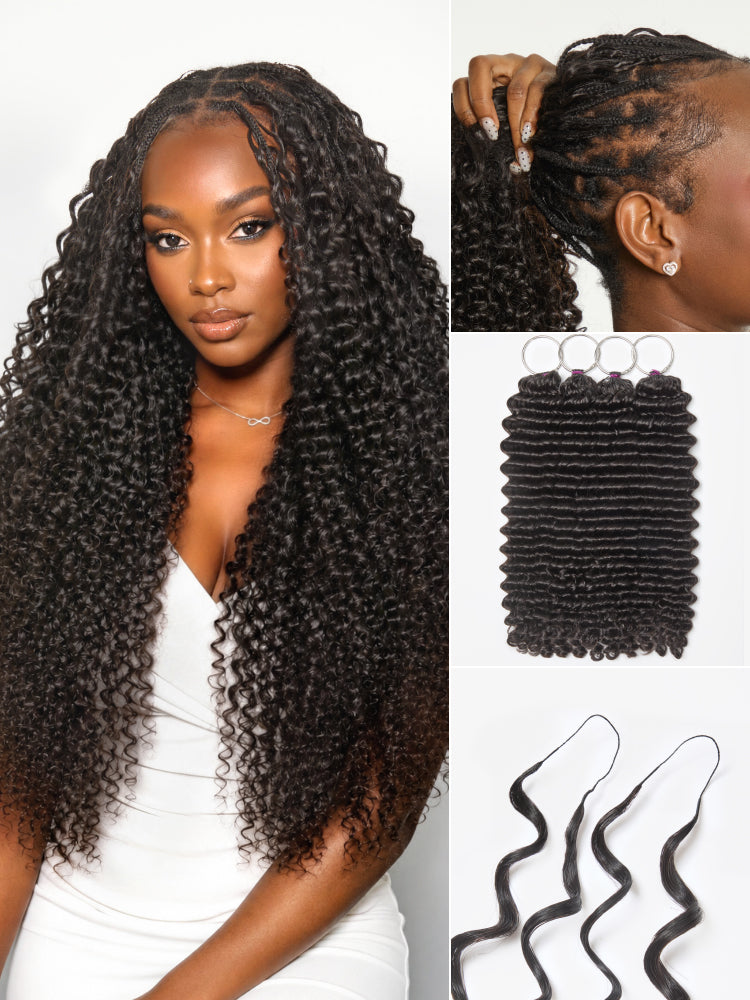
Miracle Knots Human Hair Crochet Extensions
Choose from wet and wavy, Burmese curly, or kinky straight textures for boho braids, crochet weaves, and fuller protective styles.

Kinky Straight Feather Crochet Hair
A textured straight option for full crochet looks with a natural-looking blowout finish and visible root texture.

Ombre Brown Deep Wave Crochet Hair
A highlighted deep-wave option for crochet styles that need curl definition and warm color without coloring natural hair.

Deep Wave Feather Crochet Hair
A defined wave texture for boho, curly, and side-part crochet styles installed through a flat cornrow foundation.
Conclusion
The best braid pattern depends on the final part, leave-out, lace size, track direction, and desired styling flexibility. Keep the foundation flat, completely dry, and comfortable. Straight-back, beehive, U-part, vixen, zig-zag, middle-part, side-part, and lace-based patterns each support different sew-in goals. Similar cornrow planning can also support Luvme crochet hair, provided the hair is installed with the correct crochet method rather than sewn tracks.


 + 1
+ 1
 + 1
+ 1
 + 44
+ 44