




Deep wave and wet and wavy hair both create movement and volume, but they are not interchangeable. Deep wave describes a specific pattern with tighter definition. Wet and wavy describes human hair that can be worn smoother and refreshed into a more visible wavy or curly pattern with water and lightweight styling products.
The better option depends on your preferred volume, visible length, styling habits, and maintenance routine. This guide explains how the two textures behave and which one better fits your styling goals.
Table of Contents
What Is Deep Wave Hair?
Deep wave hair has a tighter, more regular pattern than loose wave or body wave hair. The waves repeat through the lengths, giving the hair a structured, full appearance. Because the pattern contracts, deep wave can look slightly shorter than straighter hair with the same listed length.
When dry, it usually appears airy and voluminous. Light moisture can make the wave groups look more defined and elongated. The underlying pattern remains visible, although product weight, density, and drying method can change the result.
This texture is a strong choice if you want definition without creating curls from straight hair. It works for daily wear, half-up styles, side parts, and wet-look finishes. Longer lengths require careful detangling because the tighter pattern can create friction near the nape and ends. Shoppers can compare deep wave wigs by cap design, lace area, density, and length.

Deep Wave 4x4 Closure Lace Glueless Mid Part Long Curly Wig
This human hair option shows the full definition associated with deep wave texture. Its glueless closure construction suits shoppers who want structured waves with visible body.
View Deep Wave WigWhat Is Wet and Wavy Hair?
Wet and wavy hair is defined by styling flexibility rather than one fixed curl shape. It can be worn in a smoother dry state, then refreshed with water, leave-in spray, or curl mousse to make its natural pattern more visible. The result depends on the wig's base texture.
Some wet-and-wavy wigs use water wave hair, while others use Burmese curly or another moisture-responsive texture. Two products with the same label can therefore look different. Check the listed texture, model images, density, and length instead of relying on the phrase alone.
This category suits someone who enjoys alternating between polished and textured looks. It may feel softer than deep wave, but it still needs moisture, gentle detangling, and complete drying before storage. The wet and wavy wig collection helps shoppers compare current water wave options and closure designs.
Wet and Wavy 5x5 Closure Pre-Cut Lace Water Wave Wig
This glueless side-part wig uses a water wave base texture that can be refreshed with moisture. Its pre-cut closure supports a convenient routine and natural movement.
View Wet and Wavy Wig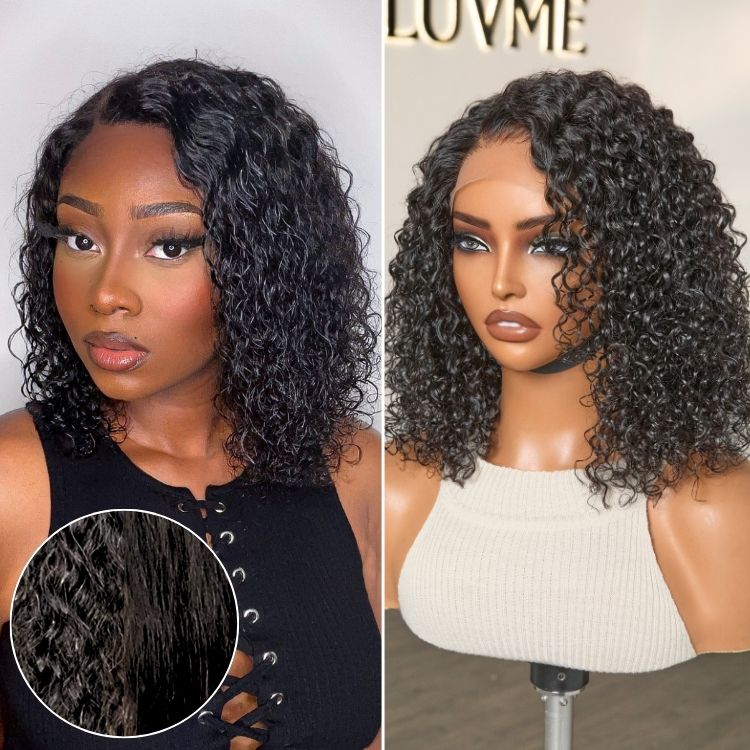
Is Wet and Wavy the Same as Water Wave?
The terms are often used together because water wave is a common base texture for wet-and-wavy wigs. A product can be both: water wave identifies the visible pattern, while wet and wavy explains how the hair can be refreshed.
When shopping, confirm whether the product lists water wave, deep wave, Burmese curly, or another texture. If you want to switch between smoother and textured finishes, look for a product that describes wet-and-wavy styling behavior and shows both dry and refreshed results.
Deep Wave vs Wet and Wavy: Key Differences
The biggest differences are pattern consistency, volume, visible length, and flexibility. Deep wave starts with a defined pattern and usually keeps a clearly textured appearance. Wet and wavy describes how hair responds to water, so its final shape depends on the original texture.
| Feature | Deep Wave Hair | Wet and Wavy Hair |
|---|---|---|
| Main meaning | A specific, tighter wave texture | A styling feature based on moisture response |
| Pattern | More regular, defined, and structured | Depends on the product's original texture |
| Volume | Usually looks fuller at the same density | Often looks softer and more flowing |
| Visible length | May look shorter because of tighter bends | May show more length with a looser base pattern |
| Dry appearance | Clearly textured and voluminous | Can appear smoother or softly textured |
| Damp appearance | More grouped, elongated, and defined | Natural waves or curls become more visible |
| Best for | Consistent definition and bold volume | Flexible styling and changing finishes |
| Care focus | Preserving definition and limiting tangles | Balanced moisture and complete drying |
At the same density, deep wave often looks fuller because its tighter bends occupy more visual space. That contraction can also make it appear shorter. A looser water wave base may hang lower and feel lighter.
When dampened, deep wave becomes more grouped and defined rather than changing into a different texture. Wet-and-wavy hair is intended to reactivate its natural waves or curls with moisture. Neither option is maintenance-free: long lengths, high density, color processing, and frequent wear can increase tangling and dryness.
How to Choose the Right Texture
Choose Deep Wave If You Want
- A clearly defined wave pattern
- Fuller-looking volume and body
- A textured finish that remains visible when dry
- A bold curly-wave appearance
- Wet looks, half-up styles, and statement volume
Choose Wet and Wavy If You Want
- More flexibility between styling moods
- A smoother look and refreshed waves from one wig
- Soft, flowing movement
- A texture you can redefine with moisture
- A simple water-and-mousse refresh routine
Choose deep wave if your priority is structured definition, strong volume, and a textured finish that remains visible when dry. It works well when you want a bold curly-wave appearance or fuller silhouette.
Choose wet and wavy if you value flexibility. It is a better match when you want one wig that can look smoother on some days and more visibly wavy after a water-and-product refresh. It also suits shoppers who prefer soft movement over a regularly repeated pattern.
Consider length and density together. Deep wave often appears fuller and shorter because the pattern contracts, so a slightly longer option may better reach your desired placement. With wet and wavy hair, confirm the base texture because water wave will not look identical to a tighter curly pattern.
Cap construction matters too. A closure can simplify installation, while a larger frontal area offers more styling freedom. Compare lace area, cap size, pre-cut lace, part direction, and density instead of choosing by texture name alone.
How to Refresh Each Texture
How to Refresh Deep Wave Hair
- Divide the hair into sections and finger-detangle the ends first.
- Lightly mist each section with water instead of soaking the wig.
- Apply a small amount of leave-in conditioner or curl mousse.
- Scrunch upward to encourage the original wave pattern.
- Let the hair air dry without repeatedly brushing it.
- Separate a few dry wave groups with your fingers for softer volume.
Avoid soaking the hair for a quick refresh or brushing it aggressively while dry. If the ends feel rough, use a small amount of lightweight serum rather than coating the whole wig with heavy oil.
How to Refresh Wet and Wavy Hair
- Detangle from the ends upward with your fingers or a wide-tooth comb.
- Mist the hair until it is evenly damp but not dripping.
- Apply a lightweight curl refresher, mousse, or leave-in spray.
- Scrunch or finger-coil according to the base texture.
- Allow the wig to air dry fully before shaping or storing it.
- Touch and separate the waves only after they are dry.
Avoid adding product every day without removing buildup. Too much mousse, cream, or oil can make the waves stiff or dull.
Both textures benefit from low heat, heat protectant, satin night protection, and complete drying before storage. Repeated straightening may gradually weaken the original pattern.
Conclusion
Deep wave is a specific texture with tighter definition and fuller-looking volume. Wet and wavy describes hair that can move between smoother and more visibly textured states when refreshed with moisture. Water wave may be the base pattern, but it is not another name for every wet-and-wavy product.
Choose deep wave for bold texture that remains visible when dry. Choose wet and wavy if you value flexibility and enjoy changing the finish. Matching the texture with the right length, density, cap construction, and care routine will create a realistic result and make maintenance easier.





 + 1
+ 1
 + 1
+ 1
 + 44
+ 44