




Choosing between human hair and synthetic hair extensions is not only about price. The material affects how naturally the extensions blend, whether they can be restyled, how they respond to washing, and how often they may be reused. The right option depends on your usual hair texture, styling routine, maintenance preferences, and expected number of wears.
Table of Contents
What Are Human Hair Extensions?
Human hair extensions are made from real hair and are designed to move, blend, and respond more like the hair growing from the scalp. Remy hair usually keeps the cuticles aligned in one direction, which may help reduce friction and tangling. It does not make the extensions maintenance-free.
Human hair can generally be curled, straightened, washed, and colored more easily than synthetic fiber. However, frequent heat and chemical processing can still cause dryness or breakage. Follow the instructions for the individual product, use heat protectant, and test a hidden section before changing its color or texture.
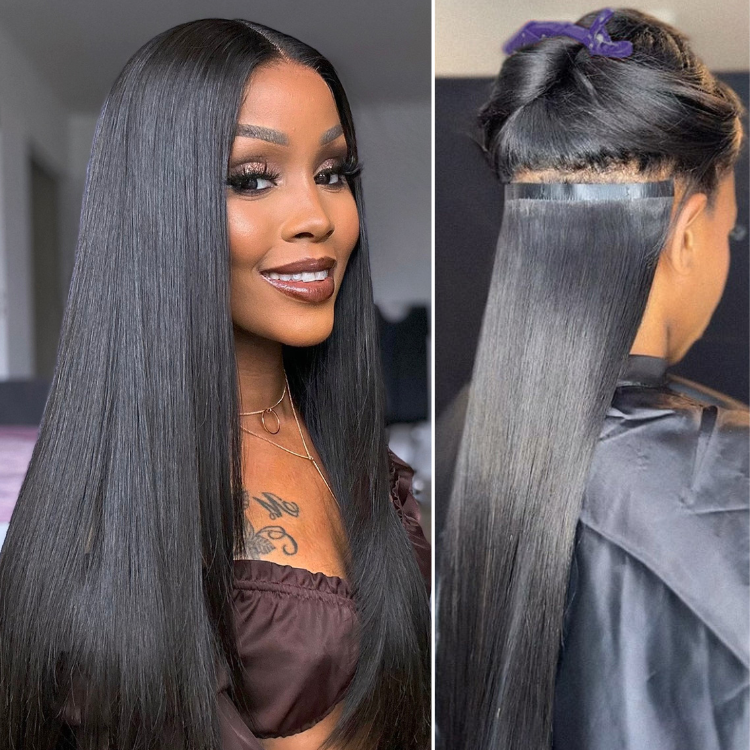
Multi-Texture Real Human Hair Clip-In Extensions
This 135g clip-in set is available in several texture directions, including straight, body wave, yaki straight, kinky straight, kinky curly, messy curly, and Burmese curly coil ends. Choose the texture closest to the way you normally style your own hair.
What Are Synthetic Hair Extensions?
Synthetic extensions use manufactured fibers to reproduce a particular color, texture, curl, or braid pattern. They are commonly pre-styled, so they may require less daily reshaping and usually have a lower initial price. Quality varies: some synthetic fibers look soft and realistic, while others appear shinier or move less naturally.
Standard synthetic extensions should not be exposed to hot tools or ordinary hair dye. Products clearly labeled heat-friendly may allow limited restyling, but only within the manufacturer’s approved method and temperature range. Their preset texture may hold well, but washing, friction, clothing, and repeated wear can still cause frizz or matting.

Human Hair vs. Synthetic Hair Extensions: Key Differences
| Factor | Human Hair Extensions | Synthetic Hair Extensions |
|---|---|---|
| Appearance | Usually softer with more natural movement | Quality varies; some fibers may look shinier |
| Texture Matching | Available in straight, yaki, curly, coily, and wavy textures | Limited to the manufactured texture |
| Heat Styling | Usually possible with conservative heat and thermal protection | Only when clearly labeled heat-friendly |
| Coloring | May accept color, but product restrictions still apply | Usually cannot be recolored with ordinary hair dye |
| Daily Maintenance | More styling flexibility but more upkeep | Less reshaping but fewer correction options |
| Repeated Use | Often suitable for many wears with proper care | Usually better for occasional or shorter-term use |
| Initial Cost | Usually higher | Usually lower |
| Best For | Natural blending, customization, and regular wear | Fixed styles, fashion colors, and occasional wear |
Cost per wear can be more useful than purchase price alone. A synthetic set may cost less initially, while a human hair set that blends well and is reused regularly may offer stronger long-term value. Weight, length, color, texture, and attachment design also affect comfort and realism.
How Can You Tell If Extensions Are Human Hair or Synthetic?
- Read the material description. Look for clear wording such as 100% Human Hair, Remy Human Hair, or Synthetic Fiber.
- Check the heat instructions. Human hair products usually include styling guidance. Synthetic products should state clearly whether the fiber is heat-friendly.
- Review the color policy. Some human hair can be dyed, although bleaching may be discouraged. Standard synthetic fiber usually does not accept ordinary color.
- Observe movement and shine. Human hair often shows more natural variation, but high-quality synthetic extensions can also look realistic.
- Use reliable product information. Avoid online burn tests, which are unsafe and may damage the extensions.
How Care Differs Between Human and Synthetic Extensions
Human Hair Extension Care
- Detangle from the ends upward while supporting the clips or wefts.
- Wash when oil, buildup, or odor makes cleansing necessary.
- Apply conditioner mainly to the mid-lengths and ends.
- Use heat protectant before curling or straightening.
- Remove detachable clip-ins before sleeping or swimming.
- Dry completely before placing them in storage.
Synthetic Extension Care
- Use products intended for the specific synthetic fiber.
- Avoid hot tools unless the manufacturer confirms heat resistance.
- Do not apply ordinary permanent or semi-permanent dye.
- Reduce friction from coats, collars, pillows, and bags.
- Detangle gently instead of coating matted fiber with heavy oil.
- Store in the original shape whenever possible.
Common Hair Extension Buying Mistakes
| Mistake | Why It Matters | Better Approach |
|---|---|---|
| Choosing only by price | The cheapest option may provide fewer usable wears | Compare expected wear frequency and cost per wear |
| Ignoring texture match | The extensions may remain visibly separate | Match your normal styled texture |
| Assuming all synthetic hair is heat-safe | Heat may melt or permanently distort the fiber | Check the product label before styling |
| Assuming all human hair can be bleached | Previous processing may cause dryness or breakage | Follow the individual color instructions |
| Buying too little hair | The final style may look thin or uneven | Choose the weight according to your volume goal |
| Sleeping in removable clip-ins | Friction can affect the clips and natural hair | Remove, detangle, and store them after wear |
Luvme Human Hair Extensions for Natural Blending
The following Luvme human hair clip-ins cover six different blending goals. Select a texture close to the way you normally wear your own hair, rather than choosing a dramatically different texture that will require frequent heat styling.
Swipe or scroll horizontally to compare six textures, colors, and blending options.

Yaki Straight Zero Trace Clip-Ins
A lightweight 100g set with a low-profile base for blending with textured straight, relaxed, or silk-pressed hair.

Kinky Curly Seamless Clip-Ins
A 135g curly option for adding bounce, length, and fuller texture while maintaining a natural-looking curl pattern.

Soft Body Wave Seamless Clip-Ins
A 135g body-wave set for shoppers who want soft movement, polished volume, and a style that can be dressed up or down.

Kinky Straight Seamless Clip-Ins
A textured straight option for creating fuller blowout-inspired looks without choosing an overly silky finish.
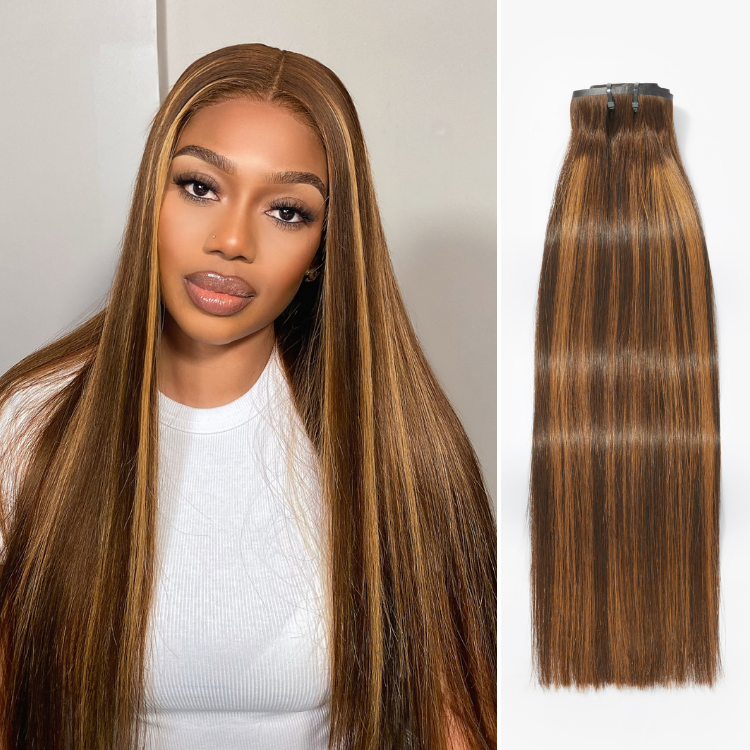
Brown Highlights Silky Straight Clip-Ins
A pre-highlighted 135g set for adding straight length and warm dimension without coloring natural-black extensions at home.
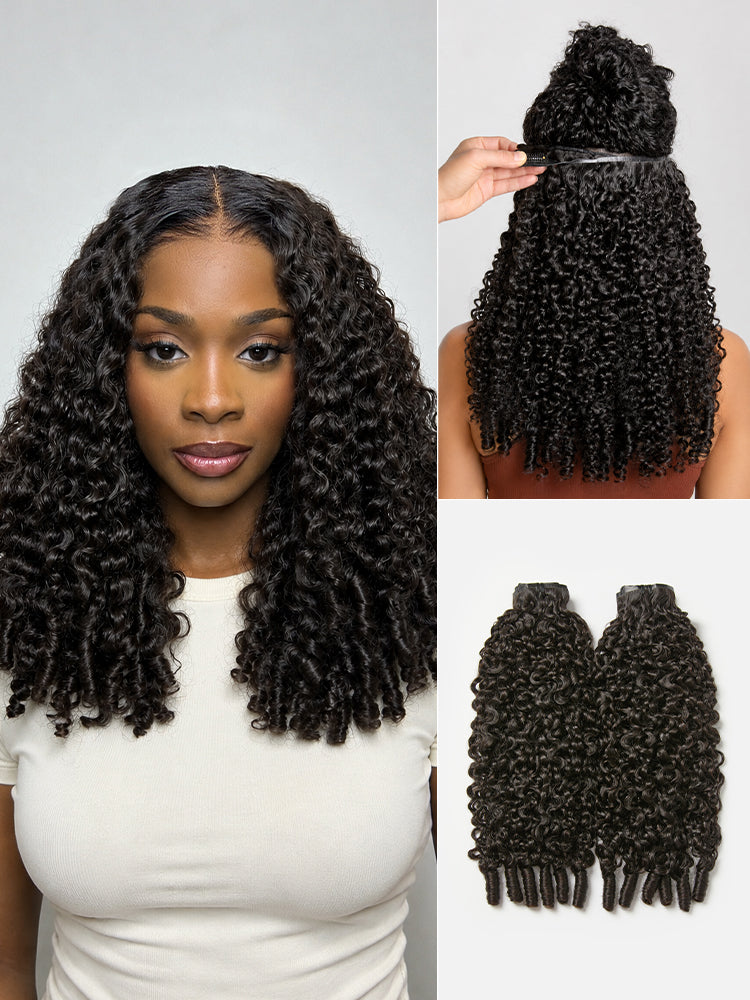
Burmese Curly Finger Coil Ends Clip-Ins
A 135g curly set with defined finger-coil ends for adding springy texture and a shaped, fuller curly finish.
Frequently Asked Questions
Are human hair extensions worth the higher price?
They may be worth it for regular wear, natural blending, and the ability to change the style. For a single event or fixed fashion look, synthetic extensions may provide better short-term value.
Can synthetic extensions look natural?
Yes. Fiber quality, texture match, color, shine, weight, and placement all affect realism. Using only the amount needed may create a more believable result than adding excessive volume.
Can you wash synthetic clip-in extensions?
Many synthetic clip-ins can be washed, but the correct water temperature, cleanser, detangling method, and drying process depend on the specific fiber instructions.
Can you mix human hair and synthetic extensions?
You can, but differences in shine, movement, texture, heat tolerance, and care may become visible. Using one material usually creates a more consistent result.
Conclusion
Human hair extensions offer more flexibility for natural blending, restyling, and repeated wear. Synthetic extensions provide a lower-cost way to try a fixed texture or color. Compare texture, weight, attachment method, care requirements, and expected cost per wear rather than choosing by price alone. Whichever material you select, follow its specific heat, color, washing, and storage instructions.





 + 1
+ 1
 + 1
+ 1
 + 44
+ 44