








Match the Texture
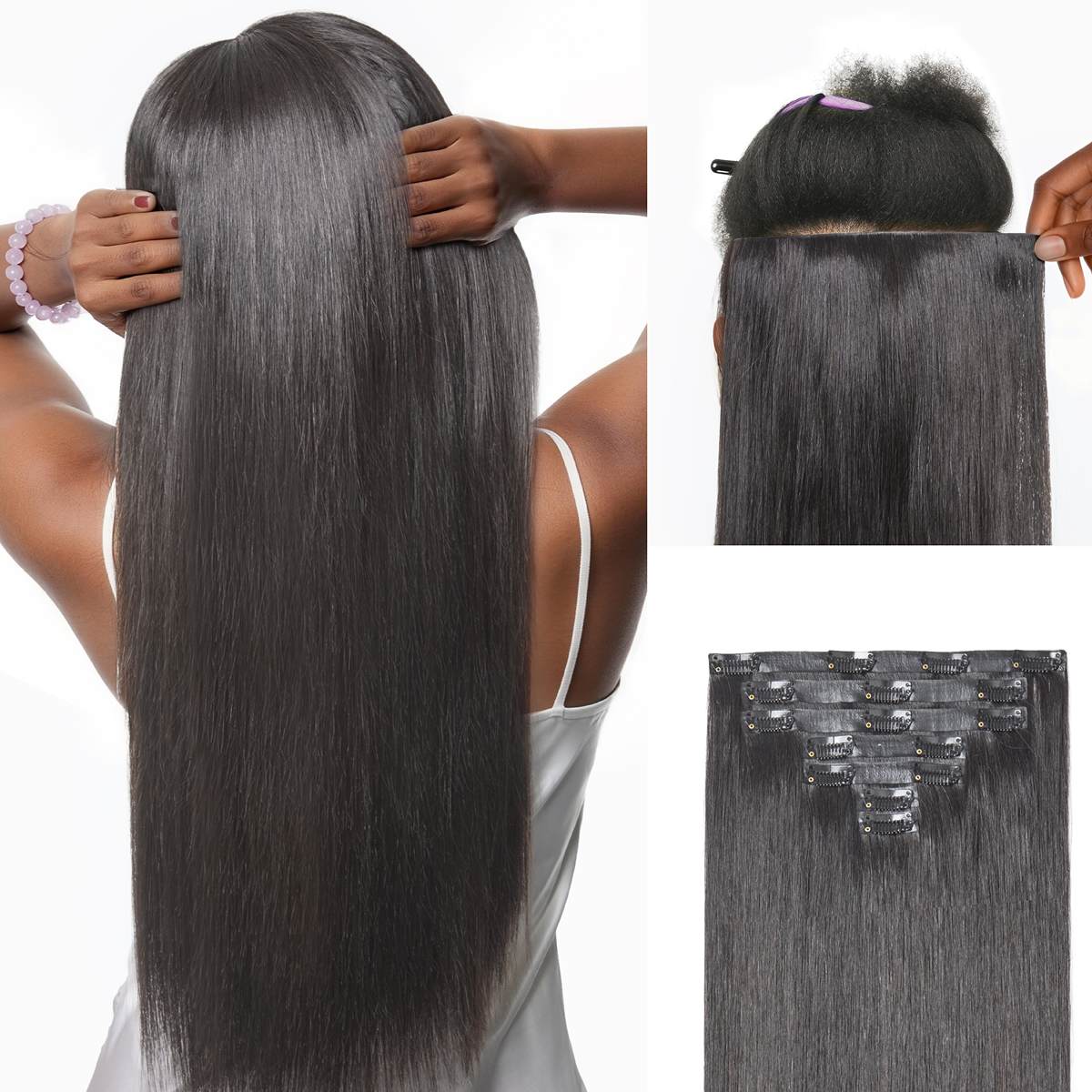
Compare the extension texture with how your own hair will actually be worn. Straight, textured-straight, wavy, and curly options create different levels of surface texture, movement, and visible fullness.

Remy clip in hair extensions combine removable clip-in construction with human hair described as Remy. They can be used to add length, fullness, or texture while allowing you to remove and reposition the wefts between wears. When choosing a set, compare more than the Remy label alone: texture, color, total weight, piece count, weft construction, and individual product specifications all affect the finished result.
If you are still comparing extension methods, browse clip in hair extensions for the broader category. You can also compare human hair clip ins across available hair and texture options.
Remy generally refers to human hair arranged so the cuticles run in a consistent direction. It describes a hair-related characteristic rather than the entire construction or quality of a clip-in set. Processing, texture, color history, density, weft design, and care requirements can still vary between products.
For that reason, Remy should not be treated as an automatic quality ranking or used interchangeably with terms such as Raw, Seamless, or Invisible. Review the specifications of the individual clip-in set before comparing styling or customization options.
Compare the extension texture with how your own hair will actually be worn. Straight, textured-straight, wavy, and curly options create different levels of surface texture, movement, and visible fullness.
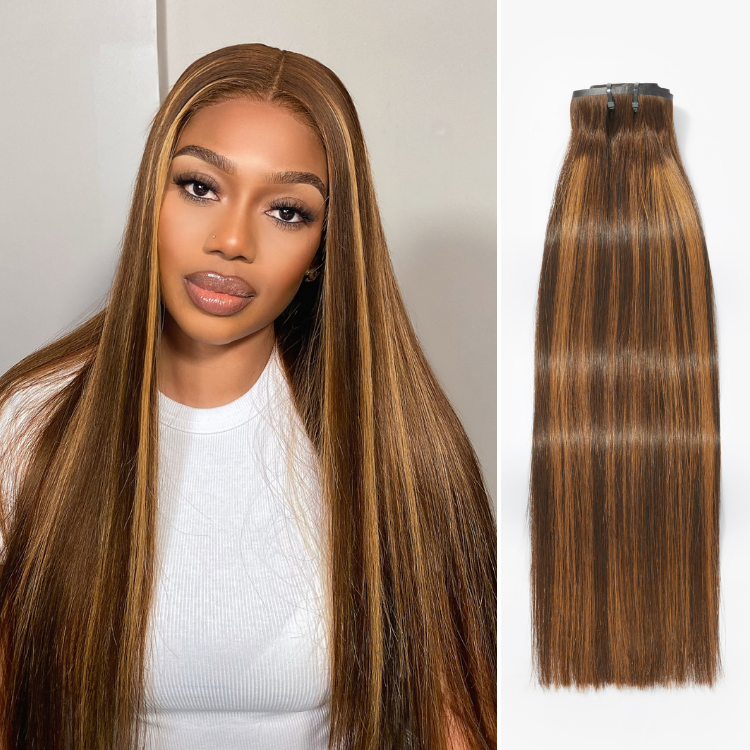
For a blending style, compare the extension shade with the visible mid-lengths and ends as well as the roots. Also consider undertone and dimension instead of relying only on the color name.
Total grams indicate how much extension hair is included in the set. Consider weight together with your natural hair density, chosen length, and the amount of fullness you want to create.
Piece count shows how the hair can be distributed around the head. Different weft widths can provide different placement options, so more pieces do not automatically mean that a set contains more hair.
These terms describe different parts of a clip-in product. Understanding the difference can make it easier to compare sets without treating every label as a separate quality grade.
| Term | What It Describes | What to Compare |
|---|---|---|
| Remy | A hair-related product characteristic | Hair description, processing information, texture, color, and individual product specifications |
| Seamless | A clip-in weft or base construction direction | Base profile, weft thickness, total grams, piece count, and placement |
| Invisible / Low-Profile | A construction designed to reduce visible bulk on selected styles | Base thickness, placement, coverage, and how much natural hair is available to conceal the wefts |
| Texture | The visible hair pattern and surface texture | Straight, yaki, kinky straight, wavy, curly, or other listed texture options |
If a flatter weft profile is an important part of your selection, compare seamless clip in hair extensions alongside the Remy hair specifications of the individual product.
Smoother straight textures create a more streamlined finish, while yaki and kinky straight textures add more visible surface texture and body. For a fuller blowout-inspired direction, compare kinky straight clip in hair extensions .
Wavy textures create different levels of movement and definition. Compare the individual wave pattern, length, and total set weight when deciding how much volume you want through the finished style.
Curly textures create more concentrated pattern and visual fullness. Match the curl direction to the hair you want to blend with and review the selected product's length and weight together.


