



4B and 4C hair are both beautiful Type 4 textures, but they are not exactly the same. They can look similar because both have tight coils, noticeable shrinkage, and a naturally full appearance. Still, the difference between 4B and 4C hair matters when you are choosing products, detangling methods, protective styles, or a curly wig texture that matches your desired look.
4B hair usually has a tight zig-zag or Z-shaped pattern with some visible texture, while 4C hair has a tighter, less-defined coil pattern with stronger shrinkage. Both textures need moisture and gentle handling, but 4C hair often needs deeper moisture retention, smaller detangling sections, and lower-manipulation styling.
What Is 4B Hair?

4B hair is a Type 4 coily texture known for its tight zig-zag pattern. Instead of forming round ringlets, the strands often bend at sharp angles, creating a Z-shaped pattern. This gives 4B hair a fluffy, structured, and highly textured look. The pattern may be visible when the hair is damp, moisturized, or styled in twists, braid-outs, or stretched looks.
What Is 4C Hair?

4C hair is one of the tightest textures in the Type 4 family. It has very small coils that may not form a clearly visible curl pattern without styling. Compared with 4B hair, 4C hair usually appears denser, softer, and more cloud-like. The curl pattern can look compact, and the strands may shrink dramatically after washing.
4B vs 4C Hair: Key Differences
The biggest difference between 4B and 4C hair is pattern visibility. 4B hair usually has a more noticeable zig-zag shape, while 4C hair has tighter coils with less visible definition. Both textures can shrink, tangle, and dry out, but 4C hair usually shows more shrinkage and needs more careful moisture retention.
| Feature | 4B Hair | 4C Hair |
|---|---|---|
| Curl Pattern | Tight zig-zag or Z-shaped pattern | Very tight coils with less visible definition |
| Pattern Visibility | Often easier to see when damp or moisturized | May be harder to see without styling |
| Shrinkage | High shrinkage | Very high shrinkage |
| Texture Appearance | Fluffy, dense, structured, and textured | Dense, soft, compact, and cloud-like |
| Main Challenge | Dryness, frizz, and maintaining definition | Dryness, tangling, shrinkage, and breakage risk |
| Styling Strength | Can hold twist-outs, braid-outs, and stretched styles well | Works well with protective styles, mini twists, and stretched looks |
4B vs 4C Hair Care: Key Differences
4B and 4C hair both need hydration, patience, and gentle handling. The difference is in how much moisture retention, slip, and protection each texture usually needs. 4B hair often responds well to definition-focused routines, while 4C hair often needs more emphasis on moisture sealing and low manipulation.
| Care Area | 4B Hair | 4C Hair |
|---|---|---|
| Moisture | Needs consistent hydration to stay soft and defined | Needs deeper moisture retention and regular sealing |
| Detangling | Detangle in sections with conditioner or leave-in | Use smaller sections, extra slip, and more patience |
| Styling | Twist-outs, braid-outs, afro puffs, and stretched styles | Mini twists, low-tension braids, cornrows, and protected styles |
| Product Weight | Medium creams may work, but avoid heavy buildup | Richer creams or butters may help seal moisture when used correctly |
| Night Care | Satin bonnet, scarf, or pillowcase to reduce friction | Satin protection plus stretched or tucked ends for less tangling |
| Heat Use | Use heat carefully with protection | Limit heat to reduce dryness and breakage risk |
The most important care rule is to listen to how your hair behaves. If your hair feels rough, breaks easily, or tangles quickly, it may need more moisture, gentler detangling, or longer breaks between high-manipulation styles. If your hair feels coated or stiff, it may need lighter products or a better wash routine.
Luvme Curly Hair Wigs Top Picks
If you love the look of natural curls but want less daily styling, Luvme curly hair wigs can help you switch between water wave, short curly, Funmi curly, and afro curly textures while keeping your natural hair protected underneath.

Best for a fluffy curly look with adjustable drawstring security and a natural black water wave finish.
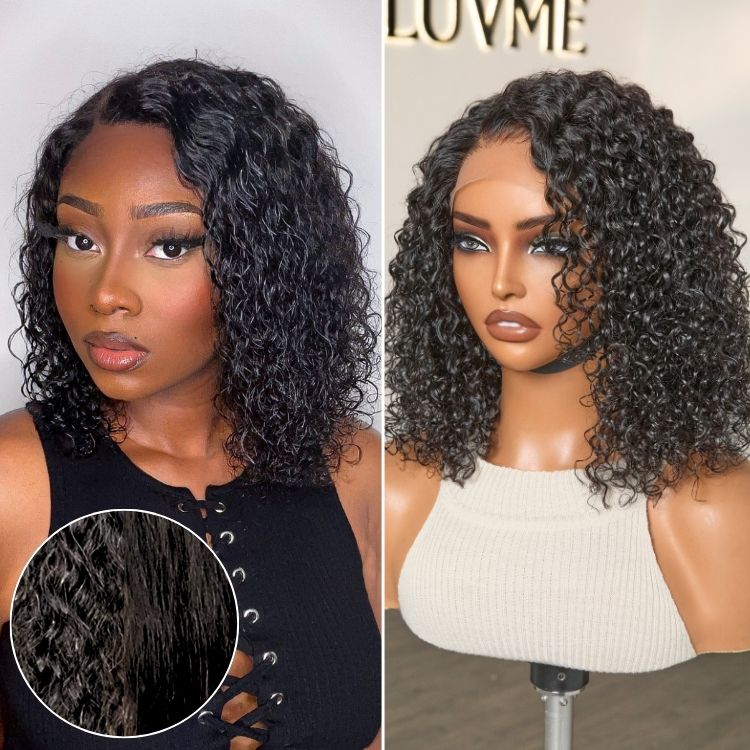
Best for a soft water wave texture that can shift between defined wet curls and fuller dry volume.

Best for a short, easy curly look with a side part and pre-cut lace for lower-maintenance wear.

Best for first-time wig wearers who want curls with bangs and less hairline blending work.

Best for a dimensional curly look with brown highlights, wider parting space, and HD lace.

Best for a fuller afro curly finish inspired by dense Type 4 texture and protective styling needs.
Final Thoughts
4B and 4C hair are close on the Type 4 spectrum, but their patterns and care needs are different. 4B hair usually shows a tighter zig-zag pattern with more visible texture, while 4C hair has smaller, tighter coils that may appear less defined and shrink more dramatically.


 + 1
+ 1
 + 1
+ 1
 + 44
+ 44