



Crochet hair can collect sweat, scalp oil, dust, and product buildup. Washing it helps the scalp feel fresher, but rough handling can tangle the lengths, loosen the knots, or leave the braid base damp. The safest approach is to work in sections and avoid rubbing the hair together.
Before washing, make sure the braid foundation and crochet knots are still secure. If you are preparing a new protective style, follow our guide to installing Luvme crochet hair to create a flat base that is easier to clean and maintain.
Table of Contents
Can You Wash Crochet Hair While It Is Installed?
Yes, crochet hair can be washed while installed. Focus on the scalp and braid base while keeping manipulation of the added hair low. Crochet knots stay more secure when the hair is handled downward rather than piled, twisted, or scrubbed.
Wash when the scalp feels oily, sweaty, itchy, or coated with product. Exercise, hot weather, and frequent edge-control use may make cleansing necessary sooner. Let the condition of the scalp guide you instead of washing on a rigid schedule.
Human hair crochet extensions can usually be conditioned and reshaped more like natural hair, while synthetic fibers may react differently to heat, cleansers, and styling products. Regardless of material, the braid base needs gentle cleansing and complete drying.
Cleaning can help maintain the installation, but no protective style should remain in place indefinitely. Read how long crochet hair usually lasts to understand when washing is still useful and when it may be better to remove or reinstall the style.
Focus on the Scalp First
Most buildup sits around the roots and cornrows, so careful scalp cleansing matters more than heavily shampooing every strand.
Protect the Installed Hair
Keep the lengths separated and move your hands downward to reduce frizz, tangling, and movement around the knots.
What You Need Before Washing Crochet Hair
Prepare everything before getting the hair wet so each section can be cleaned and dried without unnecessary handling.
Keep a wide-tooth comb nearby only for straight or loosely textured sections. Curly crochet hair is usually better refreshed with fingers so the curl groups stay defined and the installed pieces are not pulled away from the braid base.
How to Wash Crochet Hair Without Ruining the Style
Work slowly and keep the hair moving in one direction. For synthetic crochet hair, confirm that the product's care instructions allow washing.

Separate the Hair Into Sections
Divide the style into four to six sections and secure each one loosely with a soft scrunchie or clip. Sectioning keeps the lengths apart, reduces tangling, and gives you better access to the scalp and braid base.

Apply Diluted Shampoo to the Braid Base
Mix a small amount of gentle shampoo with water in an applicator bottle. Apply it along the visible parts, hairline, crown, and nape. Use only enough product to lift buildup because excess shampoo can be difficult to rinse from the cornrows.

Cleanse With Your Fingertips
Massage the scalp gently with the pads of your fingertips, following the direction of the braids. Avoid scratching with your nails or moving the crochet knots from side to side, as this may irritate the scalp or loosen the installation.

Smooth the Lather Down the Lengths
Allow the shampoo lather to move from the roots toward the ends. Smooth each section downward with flat palms or use a light squeezing motion. Do not pile, rub, or twist the crochet hair together.

Rinse and Condition Carefully
Rinse from the scalp downward with lukewarm water until the braid base feels clean. Apply a lightweight conditioner mainly to the mid-lengths and ends, keeping heavy product away from the crochet knots. Rinse without twisting the hair.

Blot and Dry the Braid Base Completely
Press each section gently with a microfiber towel instead of rubbing it. Dry the roots, crown, and nape first with cool or low airflow. Check beneath the surface before restyling because the outer hair may feel dry while the cornrows remain damp.
How to Refresh Crochet Hair Between Washes
A refresh can restore shape when the scalp does not yet need a full wash, but it should not replace cleansing once sweat, odor, or buildup becomes noticeable.
- Clean exposed areas: Wipe the hairline and visible parts with a damp cloth or a small amount of scalp cleanser.
- Use a light mist: Apply water-based moisture to the lengths without soaking the braid base.
- Reshape with your fingers: Separate curls, smooth waves downward, or detangle straight textures from the ends upward.
- Trim damaged ends: Remove a few severely tangled tips instead of repeatedly pulling them apart.
- Protect the style at night: Loosely gather the hair and cover it with a satin bonnet or scarf.
Avoid applying heavy oil every day because it can increase buildup. For a more complete daily and nighttime routine, read our guide on how to care for human crochet hair .
Luvme Crochet Hair Options for Easier Care
Texture affects how crochet hair should be refreshed, washed, and detangled. Curly styles benefit from finger shaping, while straight and kinky-straight textures are easier to divide into controlled sections.
Browse the complete Luvme human hair crochet extensions collection to compare wet and wavy, Burmese curly, deep wave, kinky straight, and other protective-style textures.
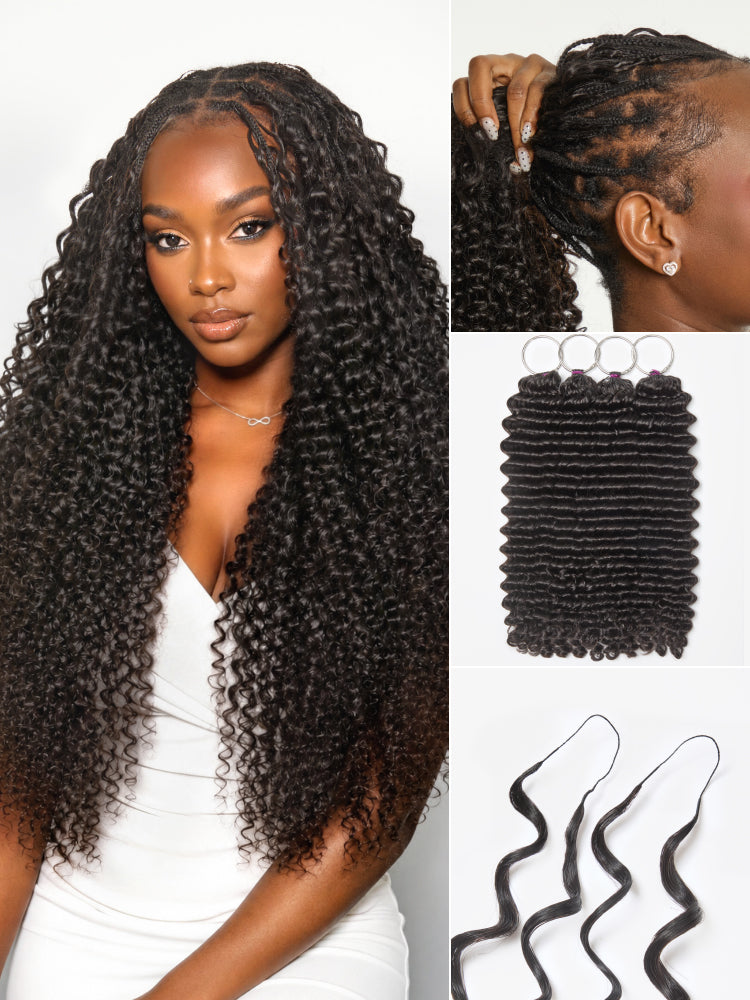
Miracle Knots Boho Braids Crochet Hair
Choose wet and wavy, Burmese curly, or kinky straight in a convenient pre-separated format.

Deep Wave Feather Crochet Human Hair
Defined volume that responds well to light moisture, finger separation, and gentle downward cleansing.

Kinky Straight Feather Crochet Human Hair
A natural-textured straight finish that is easy to section and detangle carefully from the ends upward.
Conclusion
You can wash crochet hair without ruining the style when you limit friction, protect the knots, and dry the braid base completely. Divide the hair into sections, apply diluted shampoo mainly to the scalp, smooth the lather downward, and use lightweight conditioner on the lengths.
Between washes, use light water-based moisture, finger shaping, and satin protection. Gentle handling and a fully dried braid base will support the style better than heavy products or aggressive detangling.


 + 1
+ 1
 + 1
+ 1
 + 44
+ 44