





Match the Texture
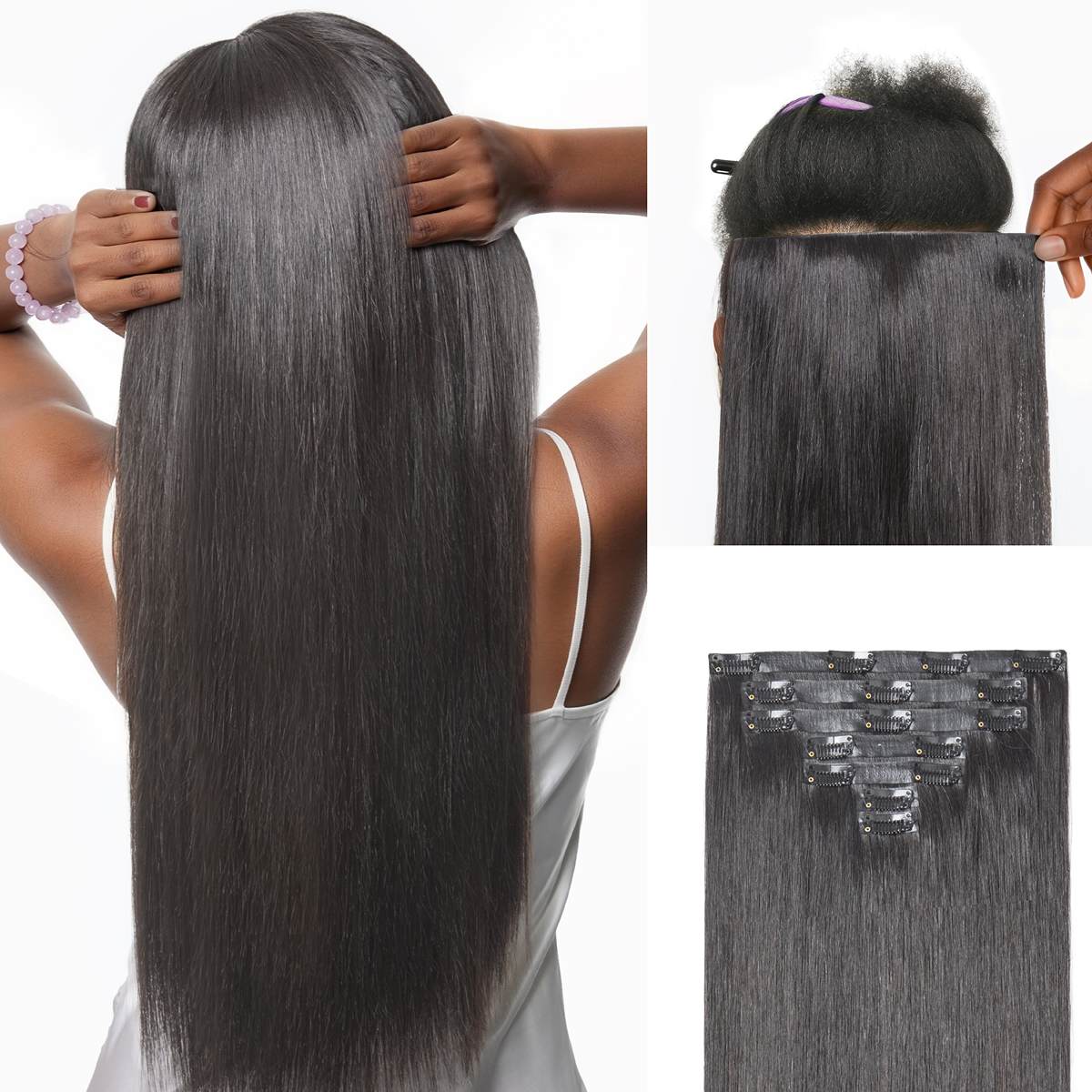
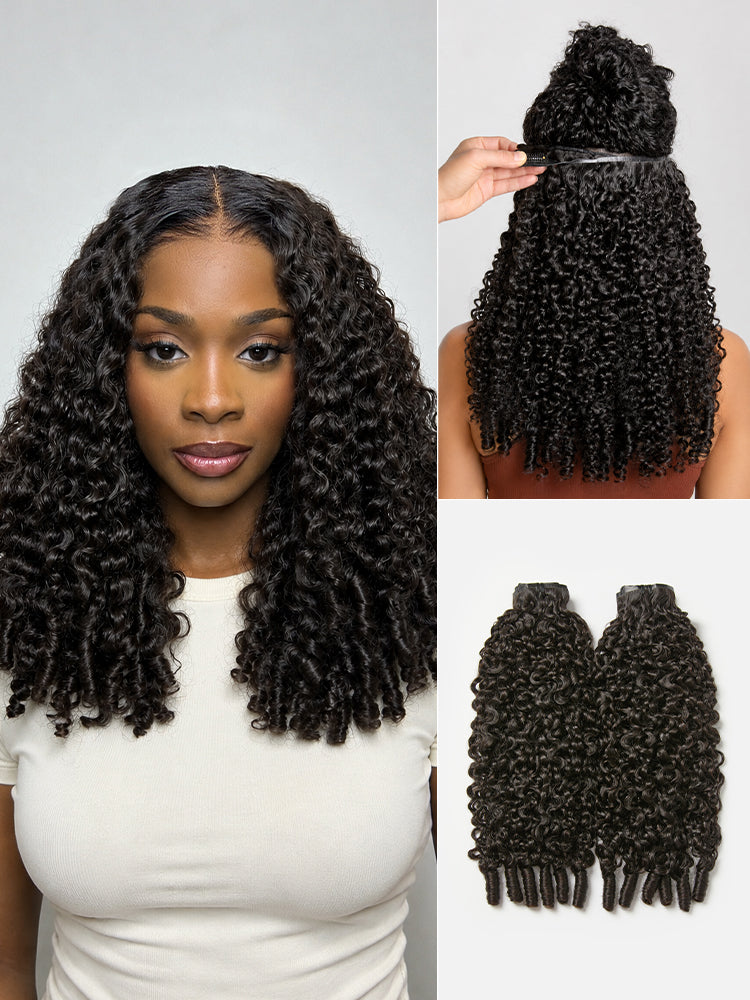
Choose a texture that works with how your natural hair will actually be styled. Straight, yaki, kinky straight, wavy, and curly textures create different surface finishes, so texture compatibility can make blending easier.
Seamless clip in human hair extensions combine human hair with flatter, lower-profile clip-in wefts designed to sit closer to the roots than many traditional clip-in constructions. They offer removable length and volume while helping reduce visible bulk beneath the natural hair when the wefts are placed and covered correctly.
Seamless describes the weft construction, while human hair describes the hair material. When choosing a set, compare the texture, color, length, total weight, number of pieces, and attachment profile rather than focusing on one feature alone. For more product types, explore clip in hair extensions . You can also compare the wider selection of seamless clip in hair extensions .
Seamless clip-ins can be a better choice when a flatter attachment area and less bulk near the roots are priorities. Classic clip-ins may still suit shoppers who prefer a traditional weft construction or a different fullness and placement setup. The better option depends on your natural hair density, how much hair is available to cover the clips, and the amount of volume you want to add.
| Clip-In Type | Weft Direction | What to Consider |
|---|---|---|
| Seamless Clip Ins | Flatter, lower-profile attachment area | Useful when reducing root bulk and keeping the wefts covered beneath the natural hair are priorities. |
| Classic Clip Ins | More traditional clip-in weft construction | Compare the individual weft thickness, set weight, and piece widths with your desired fullness and placement. |
| Invisible Clip Ins | Very thin or low-profile attachment focus | Worth comparing when minimizing visible bulk around the root area is especially important. |
Choose a texture that works with how your natural hair will actually be styled. Straight, yaki, kinky straight, wavy, and curly textures create different surface finishes, so texture compatibility can make blending easier.
Set weight affects how much extension hair is available for length and fullness. A 135g set provides more hair than a 100g set, but the right choice depends on your natural density, target volume, length, and how you plan to distribute the pieces.
Seamless sets may use different configurations, including 6-, 7-, or 9-piece options. More pieces can provide additional placement flexibility, while fewer pieces may be enough when the goal is targeted volume rather than maximum coverage.
If less natural hair is available to cover the attachment areas, weft thickness and placement become especially important. Avoid assuming the lightest or flattest set is automatically right for everyone; compare the complete set specifications with your hair.
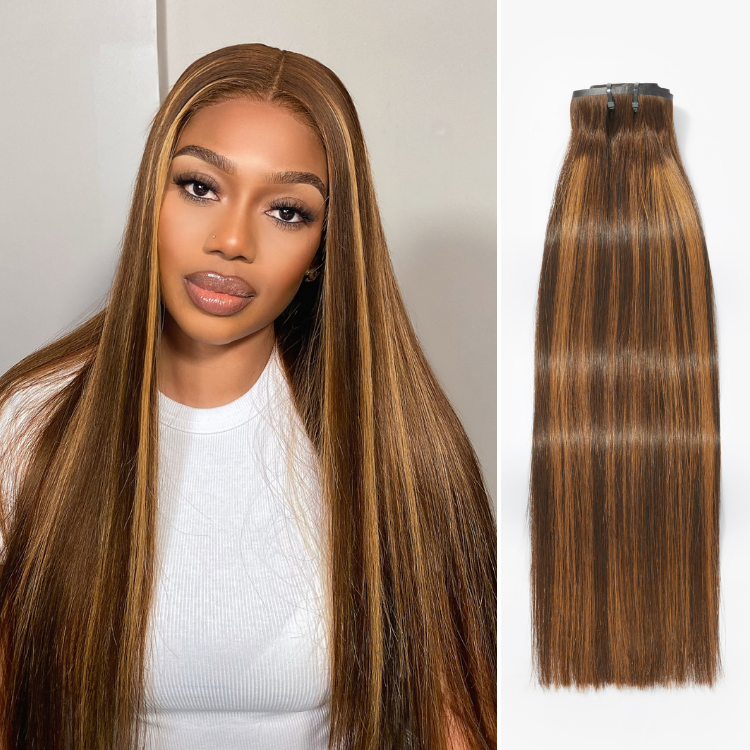
Compare the extension shade with the visible mid-lengths and ends, not only your roots. This is particularly useful when choosing highlighted or dimensional brown shades where several tones may be visible in the finished hairstyle.
Decide whether you mainly want added volume or a noticeable increase in length. A larger difference between your natural haircut and the extension length may require more attention to set fullness, placement, and blending through the ends.


